

Add Row
Add Element
cropper
update
Blazer Digital Media
update
Add Element
  • Home
  • Happenings
    • Atlanta Must-Do
    • Atlanta Cafes
    • Atlanta Culture
    • Atlanta Eats
    • Atlanta Hustle
    • Atlanta Nightlife
    • Atlanta Pulse
    • Atlanta Unplugged
    • Atlanta Vibe
    • Atlanta Voices
  • Atlanta Business Spotlight
May 27.2025
3 Minutes Read

How the Teamsters' Strike Authorization at Kroger Reflects Worker Determination

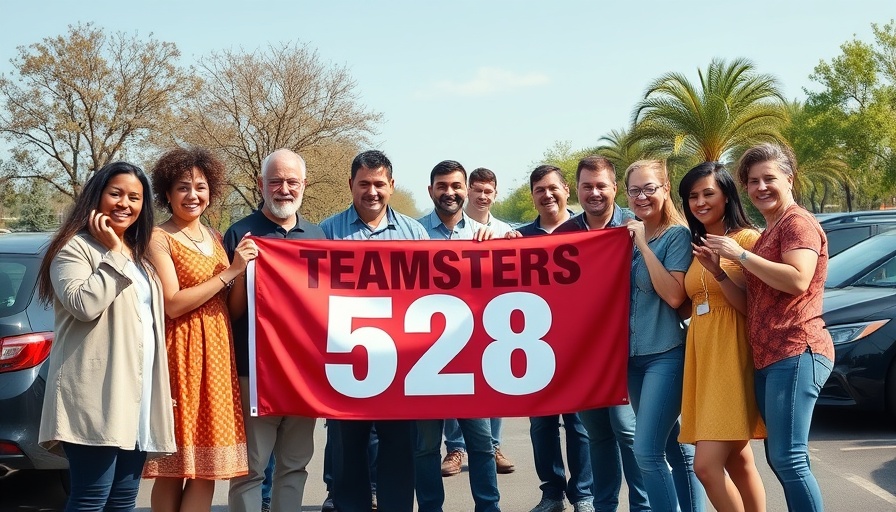
Teamsters Local 528 members united at Kroger strike authorization.

Understanding the Teamsters' Decision to Strike

In a decisive move, drivers at the Kroger fulfillment center in Forest Park, represented by Teamsters Local 528, have voted overwhelmingly to authorize a strike. This decision comes in response to repeated refusals by Kroger to negotiate a fair employment contract that includes strong wages, good benefits, and necessary workplace protections.

The Stakes: What the Drivers Are Demanding

The drivers' demands are not just about fair pay; they encompass broader concerns about workplace dignity and respect. Marion Jackson, a Kroger driver and Local 528 shop steward, highlighted the stark contrast between Kroger's substantial profits—over $2 billion in net earnings last year—and the inadequate offers presented to the workers. “This company can more than afford what we’re asking for,” Jackson stated, indicating the drivers' readiness to strike if serious negotiations do not occur soon.

The Bigger Picture: Kroger's Business Practices

Kroger's operations, with over 2,700 stores nationwide, contribute significantly to its profitability. Despite this financial strength, many workers, including those at the Forest Park fulfillment center, feel shortchanged. This raises essential questions about corporate responsibility and the treatment of employees who play a vital role in driving profits. Tom Erickson, Director of the Teamsters Warehouse Division, emphasized that the workers' efforts deserve recognition and fair compensation.

Community Support and Solidarity

Support for the drivers has extended beyond the workplace. Community leaders, such as Rev. Shanan E. Jones, President of the Concerned Black Clergy of Metropolitan Atlanta, have voiced their solidarity with the striking drivers. In Jones's view, it is unjust for a corporation to disenfranchise those whose hard work directly contributes to its success. “The men and women who drive and deliver Kroger’s products are the same ones driving Kroger’s profits,” he noted, underscoring the importance of fair treatment for these essential workers.

The Historical Context of Labor Movements

This situation reflects a larger narrative within American labor movements, where workers are increasingly organizing for better conditions and rights. The Teamsters union, founded in 1903, represents over 1.3 million workers and stands as a powerful advocate for labor rights. Understanding this historical backdrop enriches our perspective on current labor disputes, emphasizing the ongoing struggle for workers’ rights and justice in the workplace.

Future Implications: What Lies Ahead?

The potential for a strike raises important questions about the future of labor relations in corporate America. If the negotiations do not yield positive results, the implications could stretch beyond just these drivers—they might influence broader labor practices across the country. As such, community members, fellow workers, and corporate stakeholders will be watching closely to see how Kroger responds to these challenges.

Taking Action: What Communities Can Do

Effective labor movements rely not only on the workers involved but also on the support from their communities. Individuals can take steps to show solidarity—whether that means attending rallies, spreading the word on social media, or advocating for fair labor practices in their own workplaces. Communities, when united, have the power to influence corporate policies and ensure that workers’ rights are respected.

Conclusion: Standing Together for Change

The potential strike by drivers at the Kroger fulfillment center in Forest Park is a significant moment that highlights critical issues surrounding worker rights and corporate accountability. It’s vital for the community to engage with these issues actively, acknowledging that standing up for fair labor practices benefits everyone involved. By supporting the drivers and their cause, we reinforce the importance of dignity, respect, and fair compensation in today’s workforce.

As the situation unfolds, consider how you can engage with labor issues in your own community. Whether it’s supporting local strike actions or advocating for worker-informed policies, your voice can make a difference.

Atlanta Voices

16 Views

0 Comments

Write A Comment

*
*
Please complete the captcha to submit your comment.
Related Posts All Posts
04.02.2026

How The Ralph David House is Revolutionizing Affordable Housing in Atlanta

Update Transforming Lives: The Impact of The Ralph David House on Atlanta's Unhoused ResidentsIn recent years, the issue of homelessness in Atlanta has grown increasingly dire, with many residents unable to secure stable housing. Amidst these challenges, The Ralph David House stands out as a beacon of hope, providing not just shelter, but a key to reclaiming dignity and stability for the city's unhoused populace. Located in Reynoldstown, this innovative project was born from the transformation of the former Atlanta Motel, a site previously associated with crime and disrepair.New Beginnings in a Revitalized SpaceCo-founder Stan Sugarman describes the extensive renovation process that turned the dilapidated structure into The Ralph David House. "We went in there and found a lot of asbestos, lead paint, old mattresses, and toilets that had to be removed," he shares, underscoring the labor put into creating a safe refuge for residents. The successful renovation reflects a broader commitment within Atlanta to repurpose older buildings into functional and supportive housing solutions.Housing as a Path to StabilityWith 56 low-income apartments available, the Ralph David House offers accommodations to individuals earning below 30% of the area median income—a critical threshold calling attention to the pressing issue of poverty among Atlanta's unhoused. The apartments feature essential amenities such as air conditioning and heating, vital for facing Atlanta's extreme weather conditions. Moreover, the rent structure—set at 30% of each resident's income—ensures affordability, with Atlanta Housing covering the remainder of the costs.Comprehensive Support Services to Foster GrowthWhat sets The Ralph David House apart is its holistic approach to support. Beyond housing, residents have access to on-site social services and dedicated case managers who assist them in setting personal goals. Local organizations play a crucial role in providing additional resources, including medical care, meals, and laundry services, making it more than just a housing solution—it's a community aimed at fostering resilience.Why This Initiative Matters NowAs Atlanta continues to grapple with the realities of urban homelessness, initiatives like The Ralph David House are a vital part of the dialogue around solutions. Backed by the $212 million Atlanta Rising plan, this project aligns with citywide efforts to create 500 rapid-housing units, addressing both immediate and long-term needs of the unhoused. It serves as a reminder that housing stability is intertwined with health, safety, and human dignity.Navigating Misconceptions About HomelessnessStan Sugarman emphasizes a crucial lesson learned: homelessness is not simply the result of poor choices but often stems from complex life circumstances. Stories, like that of a former firefighter who faced a traumatic brain injury, paint a picture of resilience, illustrating that anyone can face unexpected hardships. Understanding the nuances of homelessness helps shift perceptions and fosters empathy towards those affected.Call to Action: Get InvolvedIf you enjoyed this inspiring story and want to stay informed about local initiatives and opportunities to help, consider joining Atlanta Local Unplugged on Facebook and YouTube. Your engagement can help spread awareness and advocate for those in need.

02.01.2026

Empowered Suburban Women are Changing Georgia's Political Landscape

Update A New Era of Political Engagement in Georgia In the vibrant suburbs of Atlanta, women are emerging as pivotal players in shaping the future of Georgia's political landscape. This grassroots movement is characterized by a growing network of suburban women who, once reluctant to step into the political arena, are now proactively influencing elections and public policy. From organizing canvassing events to participating in local campaigns, their commitment reflects a significant shift in political dynamics, steering the state toward a more inclusive and representative governance. The Power of Grassroots Activism A striking illustration of this grassroots trend unfolded in Alpharetta, where volunteers, primarily women, gathered to support Democratic candidate Debra Shigley in her recent Senate race. Among them was Barbara Peters, a first-time canvasser driven by deep concern for the current political climate. “I’ve never been highly political, but I’m becoming political because I feel like we’re in danger,” Peters shared, echoing the sentiments of many who feel compelled to act in uncertain times. This surge in political participation among suburban women is not just a response to national tensions; it has deeper roots in their experiences as mothers and caretakers, leading them to demand greater accountability from elected officials. Significant Gains in Representation The impact of this grassroots movement is evident in the numbers. Since 2016, the representation of women in Georgia's General Assembly has increased from 24% to 34%. Figures from the Center for American Women and Politics show that suburban women have helped flip 17 legislative seats from Republican to Democrat since 2017. This shift is attributed not only to changing demographics but also a unified effort by grassroots organizations like Georgia WIN List, which focuses on empowering women candidates who prioritize issues like education, healthcare, and reproductive rights. A Diverse Political Landscape Georgia's shifting demographics, driven by a rise in diverse populations and young professionals, have made its suburbs battlegrounds for political contestation. Areas that were once Republican strongholds are now hotbeds of engagement, with women playing a central role. For example, the transformation of the Sixth Congressional District, historically represented by Republican Newt Gingrich, underscores how swiftly the political landscape can change. As a result, suburban women find themselves not only voting but actively shaping elections, illustrating a broader cultural and political reawakening. Local Movements with a Broader Impact Organizations such as the Georgia Postcard Project have successfully mobilized suburban women who balance careers and family duties while contributing to political causes from home. Launched during the pandemic, this initiative reflects the unique challenges faced by women. Participants, often during the late hours after putting their children to bed, connect and organize through simple yet impactful actions like writing personalized postcards to potential voters. Bridging Divides: A Common Mission However, this surge in political engagement is not limited to Democratic women; conservative voices are also rising. The organization Women Lead Right aims to rekindle support among suburban women who had distanced themselves from the Republican Party during recent elections. Leah Aldridge, president of Women Lead Right, emphasizes the necessity of empowering women across the political spectrum, acknowledging their essential role in shaping policies that align with familial values. The Future: A Critical Role for Women As Georgia heads into a pivotal election year in 2026, suburban women are poised to significantly influence upcoming races. Many are increasingly stepping into roles that allow them to advocate for policies affecting daily life, such as education and utility management. “We can be angry about what’s happening in Washington, but we can also do something at the local level,” emphasizes Teri Anulewicz, a former city council member, highlighting the importance of local governance. This grassroots enthusiasm reflects a broader awakening, where suburban women are no longer sidelined spectators but are instead primary actors in their communities. If you enjoyed this story, why not stay connected? Join Atlanta Local Unplugged on Facebook and YouTube for exclusive local information. @atlantalocalunplugged

04.05.2026

What Was Billy Gonzales Thinking After Florida's Narrow Defeat to Georgia?

Update What Was Billy Gonzales Thinking After Florida's Narrow Defeat to Georgia? As the dust settles on Florida’s heartbreaking 24-20 loss to the Georgia Bulldogs, all eyes are on interim coach Billy Gonzales. His expression, a mix of contemplation and determination, was a focal point on the sidelines, radiating a blend of nostalgia, frustration, and perhaps a touch of hope. The Weight of Coaching Decisions In critical moments of a high-stakes game, decisions can turn into defining moments. Gonzales's choice to go for a fourth-and-one near the end of the game, rather than choosing a safer option like a field goal, seems to be a key highlight that left many pondering his thought process. Reflecting on this audacious call, Gonzales stated, "We had to go for it. If you kick a field goal, you're still down. If they go down and score, you're still down a point." His confidence in the team’s ability to convert in a crucial moment reveals the risks that all coaches grapple with—balancing aggressive strategy with the instinct to play it safe during tense moments. The Emotional Rollercoaster of the Game Florida fans witnessed a rollercoaster of emotions as their team showcased grit and determination, especially with players stepping up in light of significant injuries. Gonzales praised his players’ heart, saying, "They have no quit. They fought hard today." This comment underscores the emotional weight football carries not just for the players, but also for the coaches who invest their hearts into the game. The Road Ahead: A Mixed Bag of Anti-Morality In the aftermath of the game, Gonzales expressed a collective sentiment among fans and players alike: there were no moral victories here. While pride in the team’s fight is noteworthy, the sting of defeat lingers, leaving many to wonder how this will shape the remainder of their season. The Gators have four games left—a time for redemption, growth, and maybe, just maybe, a resurgence. He emphasized the need to regroup, stating, "We just got to bounce back. We have to keep our players together." This resilience is paramount for a team that now confronts the challenges of an unpredictable season. Unique Benefits of Understanding Coaching Dynamics For local fans and those keen on football culture, understanding the pressures and thought processes behind coaching decisions provides a deeper connection to the sport. It illuminates the humanity behind the strategy, presenting coaches as relatable figures who face profound dilemmas. Observing Gonzales’s sideline demeanor not only reveals the heavy burden of leading a team but also showcases the rich narratives embedded in college football—stories of hope, struggle, and ambition. Call to Action: Stay Connected with Atlanta's Vibrant Culture If you enjoyed this story, why not stay connected? Join Atlanta Local Unplugged on Facebook and YouTube for exclusive local information. @atlantalocalunplugged

Terms of Service

Privacy Policy

Core Modal Title

Sorry, no results found

You Might Find These Articles Interesting

T
Please Check Your Email
We Will Be Following Up Shortly
*
*
*